

Recycling Is Not Redemption
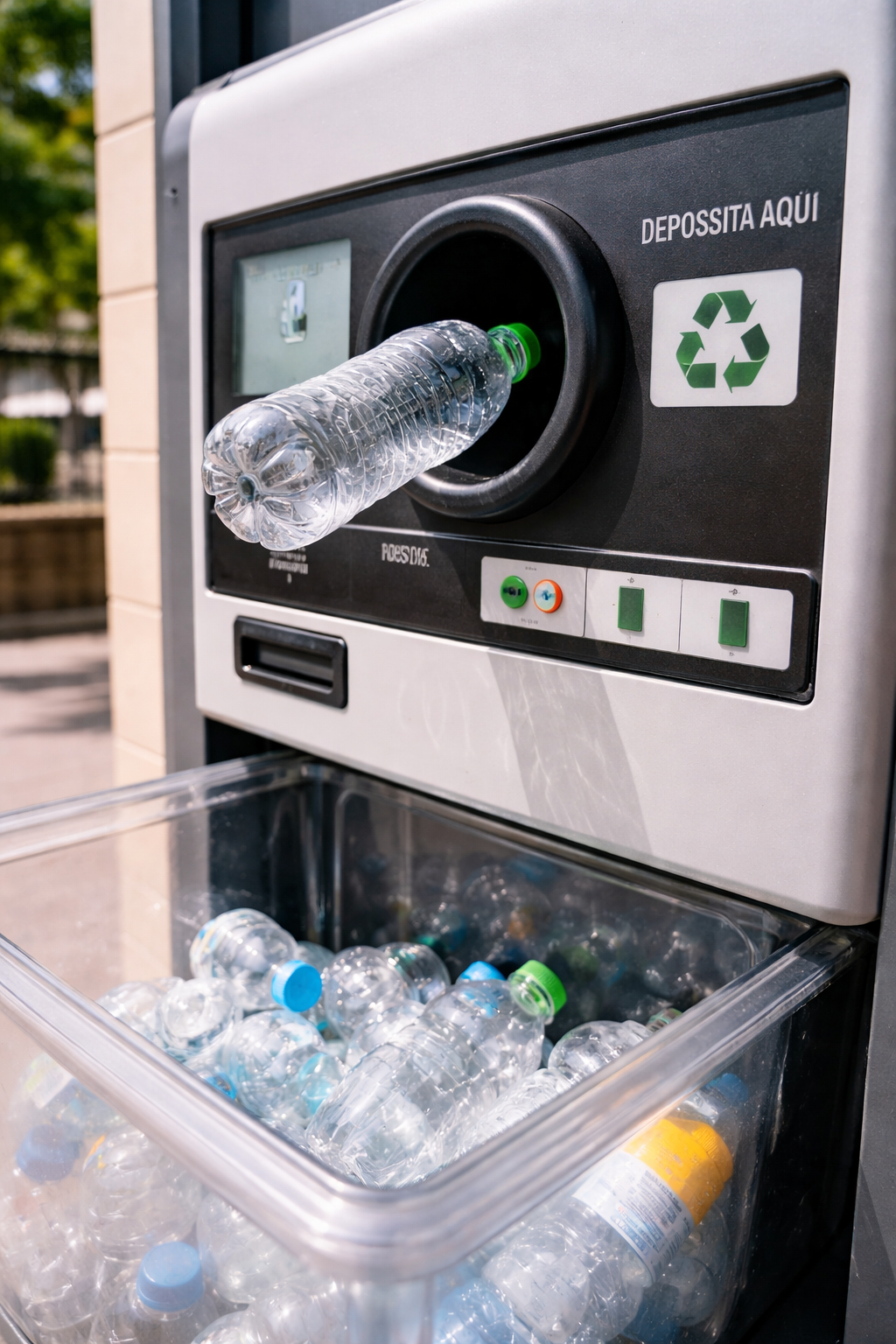
There is something deeply comforting about believing that the plastic problem is solved by placing it in the correct bin.
A kind of green absolution… We consume… We discard… We recycle… and we sleep peacefully.
The Elegant Lie of Recycled Plastic. There is something deeply comforting about believing that the plastic problem is solved by placing it in the correct bin. A kind of green absolution… We consume… We discard… We recycle… and we sleep peacefully. How convenient it would be if environmental guilt fit inside a blue container. But it does not — and we know it. The Surgical Illusion of Recycling Recycling has been elevated to a moral category: “Those who recycle comply. Those who question exaggerate.” However, the system that sustains this narrative demands a level of precision that borders on the impossible: “Perfectly educated citizens in waste separation, flawless governments in collection, industrial infrastructure capable of processing each plastic group separately, markets willing to reabsorb that recycled material”… I would call it an almost surgical synchronization. And reality, as we know, rarely operates with the precision of a surgeon. Many plastics currently in circulation are not recyclable in practice. Others can only be recycled once or twice before their quality degrades. And a considerable portion inevitably ends up where everything unsustainable ends up: in the soil, in the ocean… or within us. Because even in the perfect scenario, where everything is recycled according to an illustrated manual, a silent enemy remains: microplastics. Invisible. Persistent. Irreversible. Tiny fragments that do not disappear. They fragment further. And they end up in our food, in the water we drink, in our bodies. Recycling does not eliminate plastic. It postpones it. The Comfort of Greenwashing Large industries insist that recycled plastic is the solution. It is a seductive narrative that allows production to continue without modifying the root of the model. It is more comfortable to adjust the discourse than to adjust the material. And so greenwashing flourishes. A green package… A word like “eco,” “bio,” or “recyclable”… a recycling symbol printed with reassuring designs. But changing the label does not change the chemistry. Plastic remains plastic. And plastics pollute. Not because they are evil, but because their nature is designed to outlast our collective memory The Difference Between Recycling and Disappearing This is where the conversation becomes uncomfortable. What if, instead of obsessing over controlling waste, we designed materials that simply disappear without leaving a trace or a toxic legacy? Not industrial biodegradables. Not ambiguous ‘degradables.’ Not conditional promises. A viable solution would be something biodegradable in home compost and properly certified. True home compost. Materials capable of passing through this world without turning it into their grave. Home compost does not require global synchronization. It does not depend on perfect policies or secondary markets. It relies on a voluntary natural process that has functioned for millennia: decomposing biological waste. A material that returns to the earth in months, without generating microplastics, does not need to apologize. It needs honesty. The False Dichotomy: Progress or Consciousness Some believe that those of us who promote truly biodegradable technologies are against progress. Nothing could be further from the truth. True progress is not perpetuating waste. It is eliminating it. Innovation is not recycling contamination more efficiently. It is designing from the beginning what does not contaminate. And yes, that is uncomfortable. Because it implies redesigning supply chains, business models, corporate narratives. It implies admitting that the solution was not as simple as we were led to believe. A Question for Entrepreneurs, Manufacturers, and Governments Do we want to manage waste… or do we want to stop producing it? The difference is structural. Entrepreneurs: The market is changing. Regulations are advancing. Consumers are awakening. Manufacturers: The raw material of the future will not be the most resistant, but the most responsible. Governments: Legislating recycling is necessary. Legislating materials that disappear is visionary. And everyday users, like you or like me: “Every purchase is a vote of confidence, and as we see the world each time we step outside or check our favorite social media feed… nothing happens, nothing changes unless we ourselves make things happen.” When Innovation Does Not Make Noise There are materials developed from biopolymers such as PHA, capable of biodegrading in certified home compost — or even biodegrading naturally in waste conditions without special intervention. Real technologies. Not slogans. At Green Team®, we developed Policanoico®, a PHA-based alternative that does not promise miracles… it promises that once discarded, it facilitates its own natural decomposition. It does not need blue, gray, orange, or green bins. It does not depend on idealized or romanticized industrial systems. It leaves no microplastics as a legacy. It simply disappears. And that ‘disappears’ is perhaps the most elegant form of responsibility. Uncomfortable Reflections (Data Defeats Narrative) Recycling is a noble gesture… but it is not enough. Recycled plastic may be a transition… it cannot be the destination. Because even ‘well-managed’ plastic remains an eternal guest on a planet that never invited it. The real question is not whether we can recycle more. It is whether we are willing to produce differently. And here, dear reader, we are not talking about money or which solution is cheaper. Because only an industrialized reality reduces costs and changes realities. If this text makes you uncomfortable, it has fulfilled its purpose. If it provoked reflection, change has begun. If it is shared, perhaps you will accelerate the conversation the planet needs — a conversation that is no longer a secret that can continue to be postponed. Max Kravhalo.